
Electric psychedelic postpunk drone revival
Fairport '69 to nearly now: in search of tossed chords, looming lords, saucy lasses.

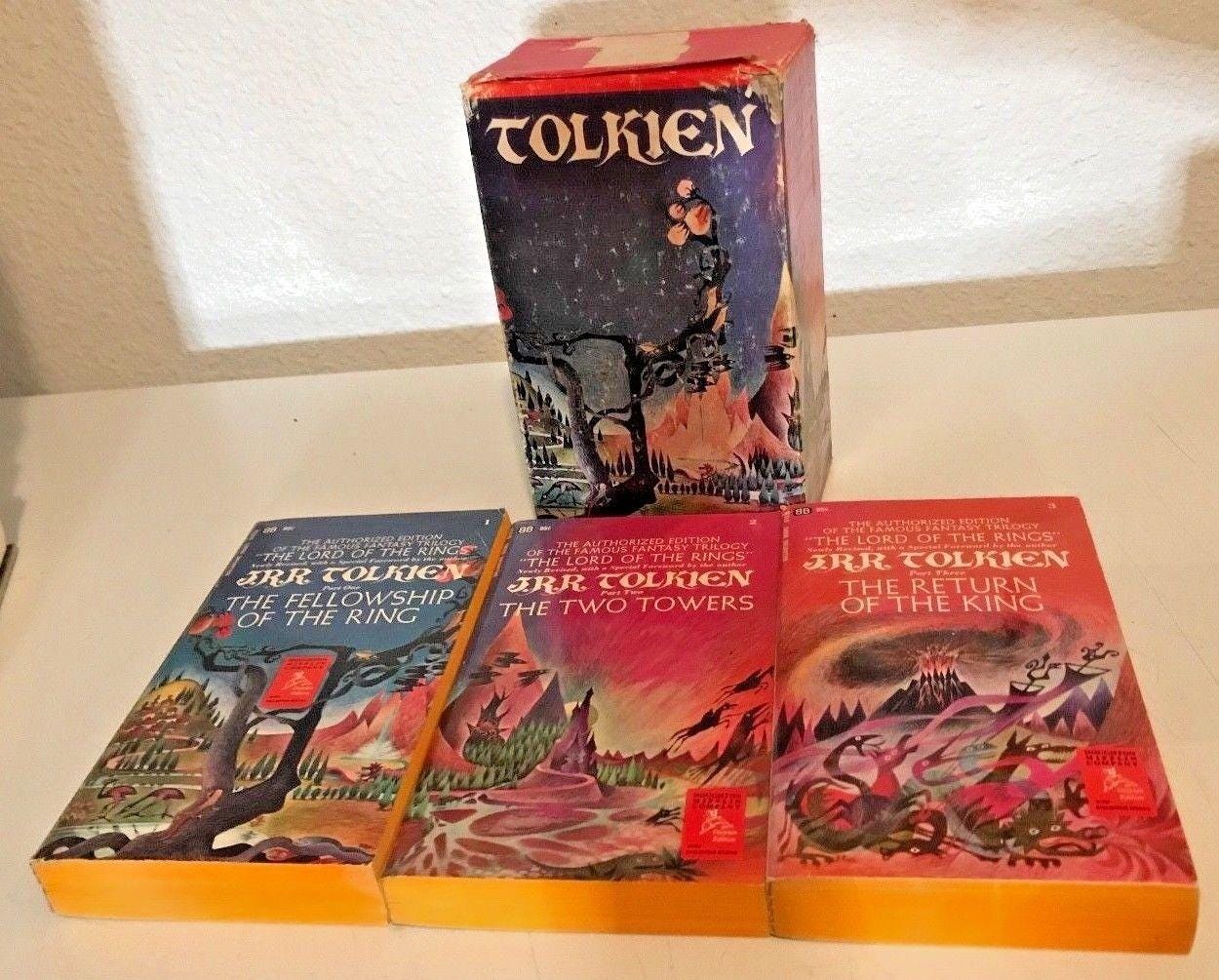
Since last entry found me trawling through Spotify’s generated playlists engineering my sonic ripostes, here’s a modified and expanded version of one I designed. I ret-conned (new term via of all tropes my catch-up Tolkien studies overlapping with profs raised by now on Peter Jackson and canny podcasters via gaming, film franchises, showrunners, streamed tsunamis of creative content, brands, apps, and cunning influencers et al. & i.e., “retrospectively for continuity”—the first three Tolkienists using the phrase never bothered to define it for near-Medicare feepayer-to-be me; who’d’ve thunk it when I saved up my allowance for the Lord of the Rings bad-trip boxed paperbacks in grade school there’d be an industry devoted to the Professor).
Imported seven marginal notes produced by the app; Spot’s original (sic) data helped. I replaced overly familiar, inapplicable, or cognate tracks with fresher, deeper, edgier cuts. Constructing a loose release timeline chronologically I stick to more or less. With slight “wow + flutter” for trends within a region or label or assortment of record store denizens turned musos (return with me to the days of yesteryear when a city’s free-form radio embodied it and franchises hadn’t eradicated funky flavors or word-of-mouth scenes) as spawned by contemporary mates or rivals. That is, organically…
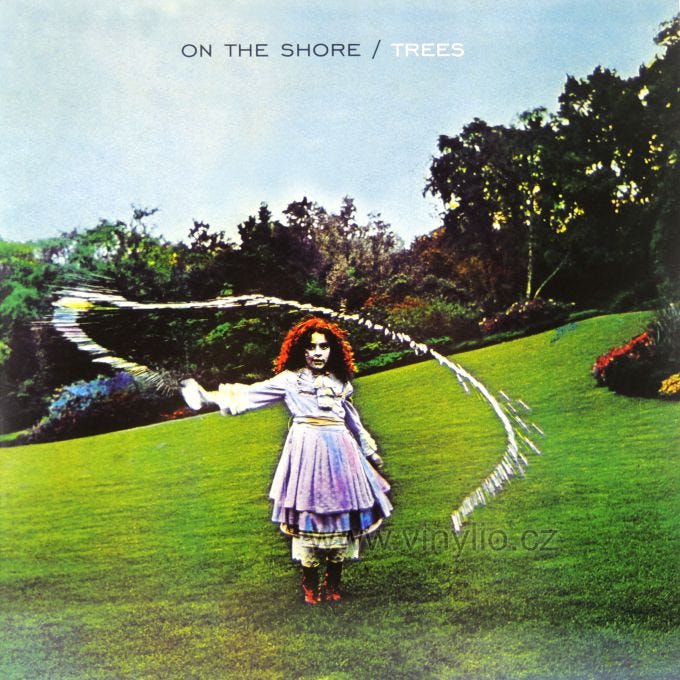
Speaking of peers, I choose this hallucinogenic image. Reminds me of Echo + the Bunnymen. This 1971 LP by imho an acid-tinged but weedy pale imitation of Fairport Convention and spin-offs Steeleye Span. Trees with a female singer with a rougher delivery than Sandy Denny and a brusque rather than melismatic range than Maddy Prior respectively doesn’t deliver. I’ve tried repeatedly this and The Garden of Jane Delawney, perfectly titled for the era. Like Sandy’s post-Fairport efforts with a clunky Fotheringay or too often sadly faltering solo beneath strings and fussy arrangements, they don’t cut it without the caliber of Richard Thompson*—or Dave Mattacks’ drumming. A simpering surfeit of British-enriched amped roots-rock after ‘69-71 Fairport/ Steeleye flops into overdubbed orchestrations, limp mid-tempo ballads, pallid pace, and pub-session journeymen on call. I realize compiling these lists how an intangible but persistent presence resonates among standouts by craft and command.
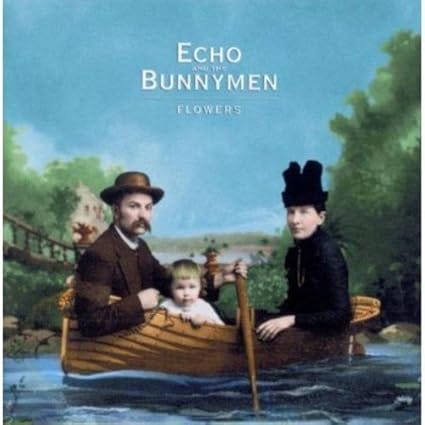
You’ll heark to chilly Echo echo’d sweet #16, if not “The Killing Moon” which I’ve never warmed to in their version or Pavement (ditto #38). Flowers’ title track with Ian McCulloch’s jaded rasp or, best, on the sly swagger of “Everybody Knows” of this so-so 2001 inevitable “comeback ‘cos we need cash with one or two founding frontmen propping up hired hands isn’t penny dreadful, given stolid guitarist Will Sergeant’s saturnine skill summoning miasma. Cf. The Gun Club. (AWOL as their twangy “My Dreams” multiplied slots in previous post’s algorithms. They don’t do flower-plowers save a plodding “Eskimo Blue Day” by Woodstock downwind Jefferson Airplane.)
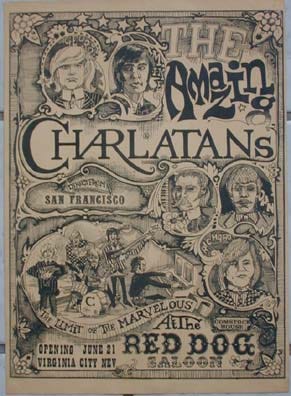
You may sense Dodgertown distance if slight disdain—tho’ I’m a city slicker sucker for “the Seed” Charlatans sun solstice ‘65 as Frisco takeoff of if not inimitable art than filigreed bespoke DIY aesthetic literally on paper—for The City of Black + Orange in grokking trustfund Beat cool; see my Grateful Dead bookworm reviews). Austin’s Black Angels (treble #44) alongside Jeffrey Lee Pierce and L.A. cowpunks better—this isn’t damned by faint praise—(overrated) Doors homages. I’m a Love guy or Byrds if you yearn for Sounds of Sunset Strip Summer Before Love: viz. Opal/ Mazzy Star Paisley Underground Three O’Clock-Game Theory-Bangles circle in Rain Parade (quadruple #20). An ambiance can’t bottle as lightning. Cue up Damon + Naomi (#41).


This is the prompt I fed into the system to spark its suggestions; only 7/50 survived…
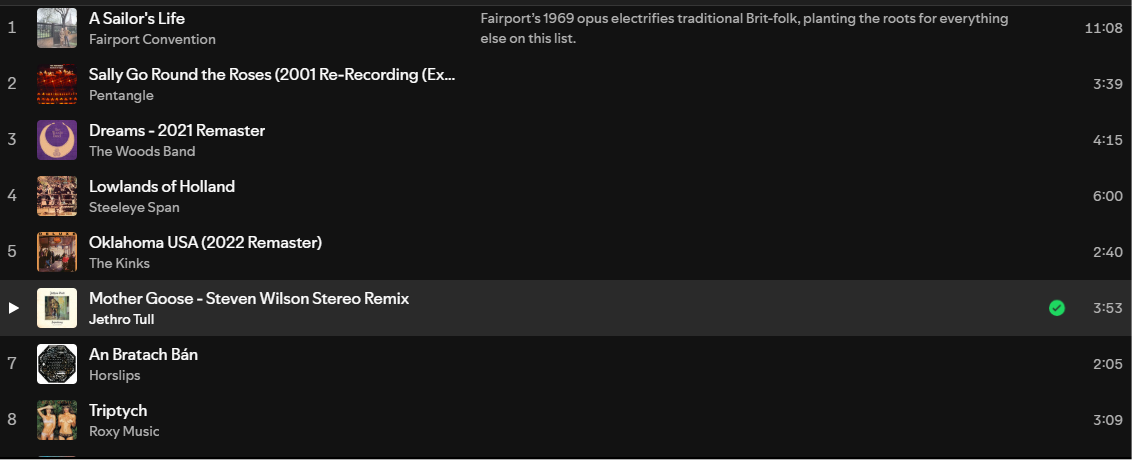
Indubitably grid power towers (half Fairport still teens) of Richard Thompson {*RT}, Sandy (both from musical families who’d arrived postwar in London from Scotland), Ashley Hutchings (founder of Fairport and then Steeleye with Maddy and Woods couple Gay and future Pogues axeman Terry et alia, later Albion Band), Simon Nicol, Iain Matthews. And Martin Lamble—before the midsummer ‘69 crash that took his life and altered the never-secure roster…it takes a Pete Frame genealogical pedigree to chart their ever-clanging clan. Horslips probably needs introduction as Irish students turned after pretending to be a band for a t.v. advert actual musicians who concocted a heady, witty punch of native and rockin’ arrangements. Pentangle rarely paired Jacqui McShee with already legendary folksinger Bert Jansch into their jazz-tinged efforts; this isn’t their strongest song. Out of eight in screenshot above, allowing for Eddie Jobson in Jethro Tull after Roxy Music to bridge that gap, I guesstimate ties between all but Kinks. Pete took on a Fairport ‘72 compilation commission if very prematurely…
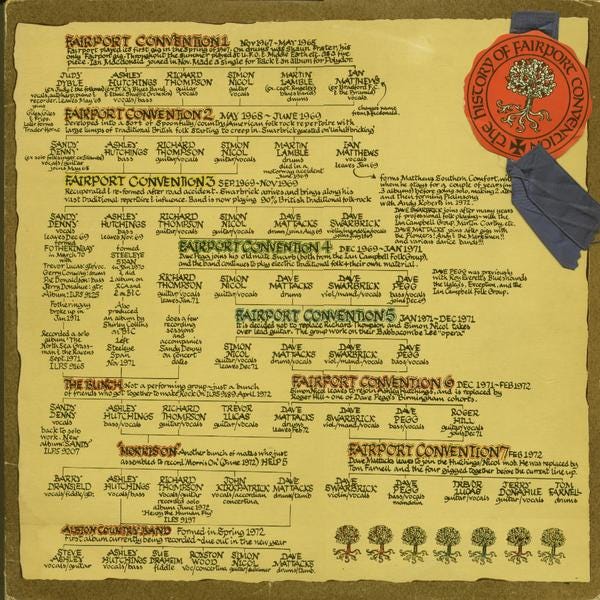
Their influence soars over those I’ll chronicle. Even if punks (RT schoolfriend Hugh Cornwall snarled for The Stranglers) kept mum—viz. Bob Mould (#32/ 33) claiming never coming across RT prior to critics noticing 1989’s cranky solo Workbook; Joe Boyd produced REM’s Fables of the Reconstruction. Tower Records’ neat giveaway Pulse I recall summoned “the Byrds played underwater” which I judged an unintended plus.
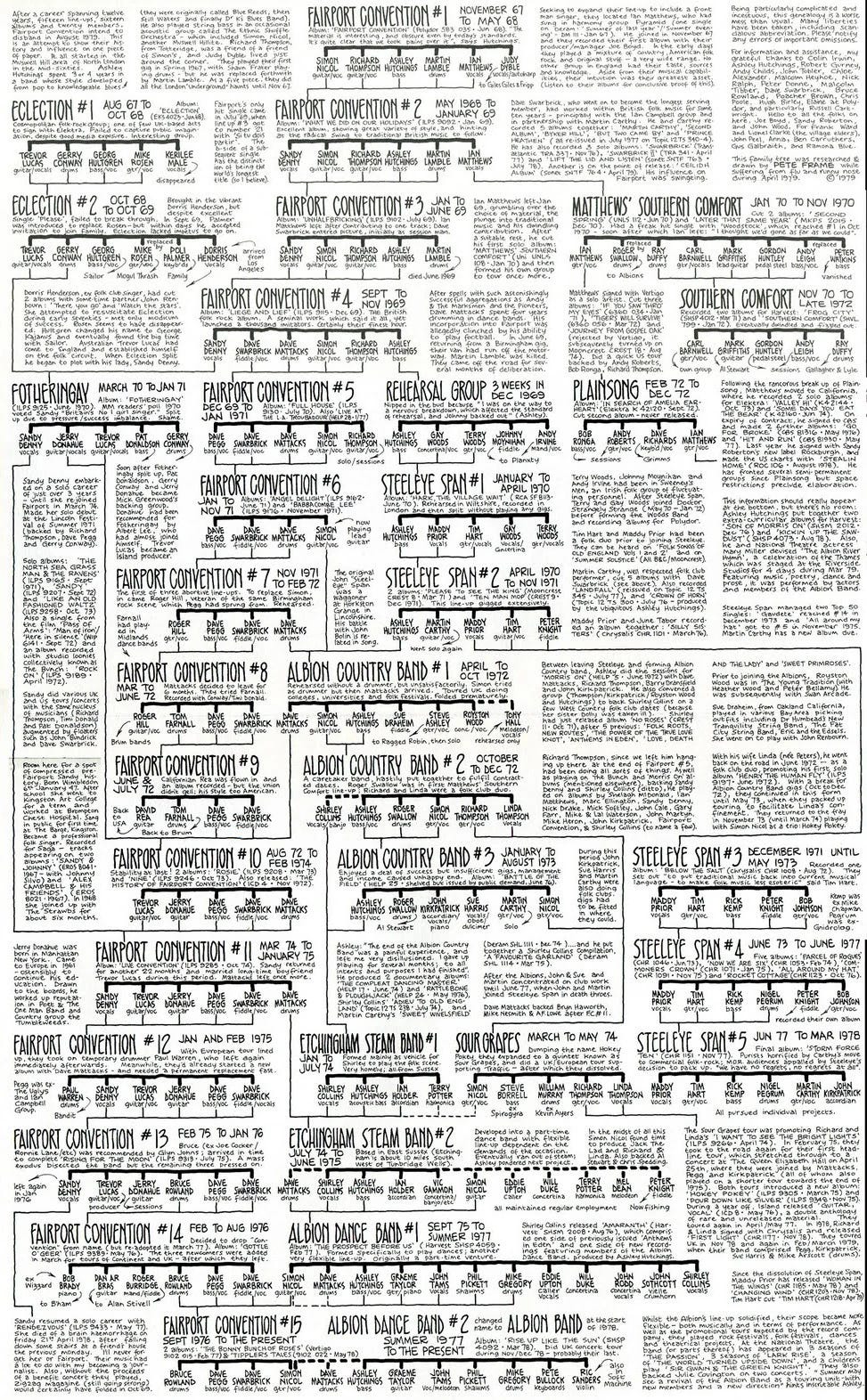
That trad beat goes on long after. Harvest season gigs with rotating vets at Cropredy, Oxfordshire. I guess it’s like Deadheads deported to the other side of the big pond.
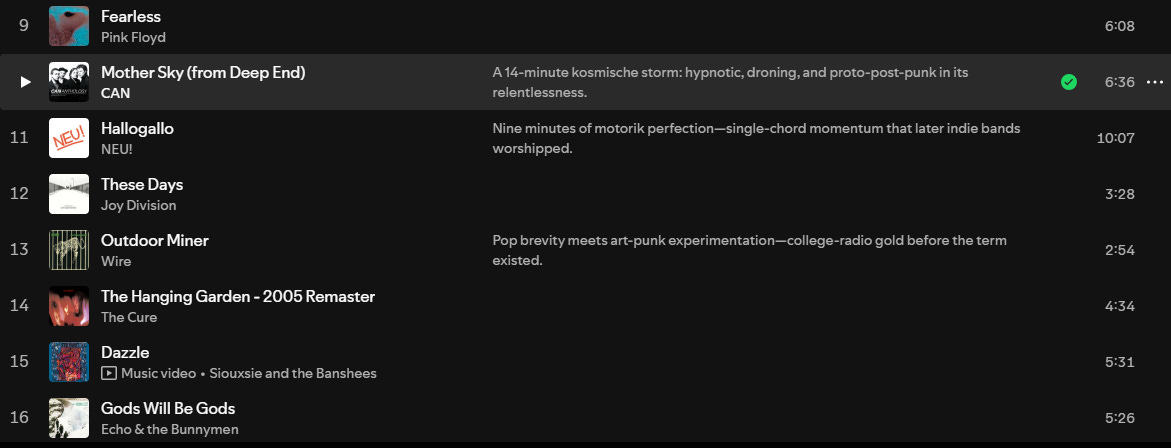
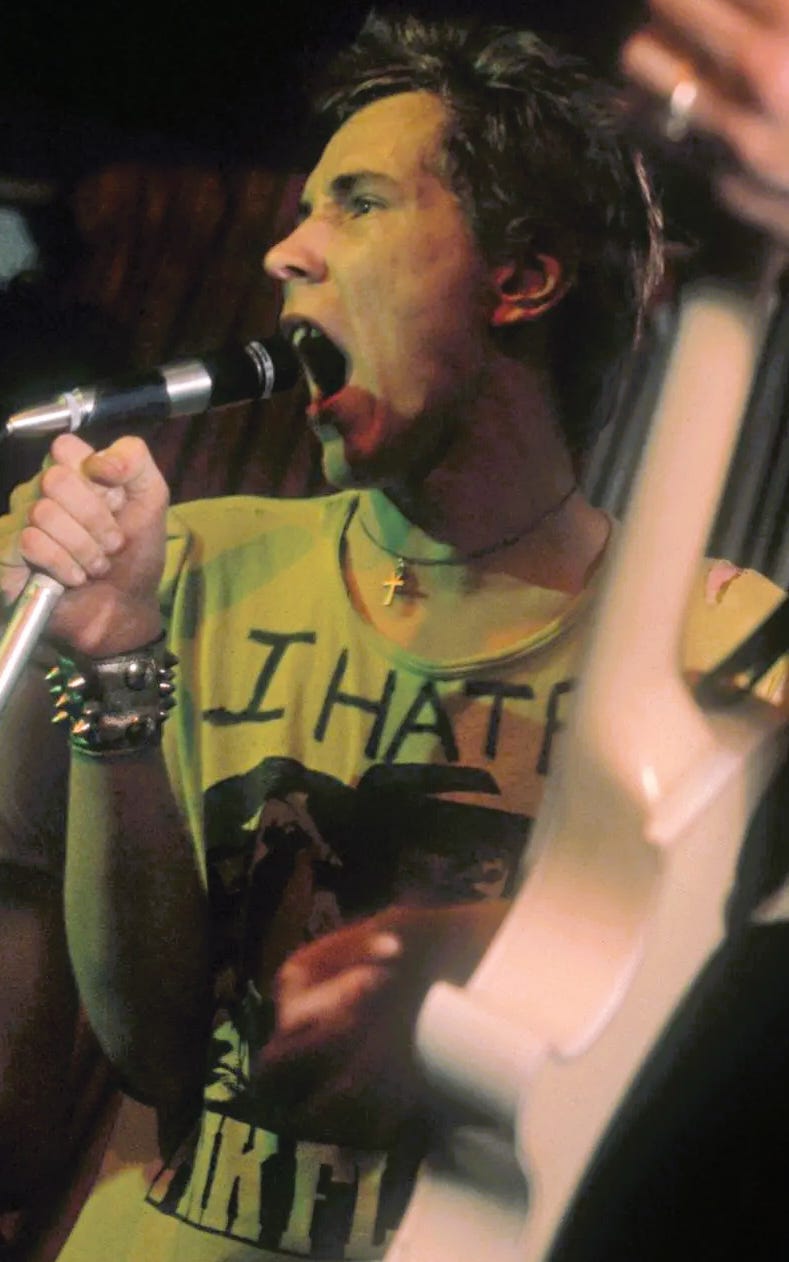
Slide #2 shows ‘70s prog Floyd, CAN, Neu! who influenced artsy punks (Wire + PiL even if Johnny Rotten sported I Hate Pink Floyd by their Pomp[eii] reign) and post-p’s. Groups as disparate as XTC, The Jam, Madness, Skids, Big Country drifted back too. And one I’ve never heard anyone boost, a snappy Scottish one-off, The Cuban Heels.
The Cure’s choice might seem odd, but I’ve aimed away from hits: this depressing even by that band’s post-Joy Division slump into sadness a punishing impression of tribal percussion and harsh angular vocals along the Siouxsie lines (Robert Smith had handled guitar for both bands around this stage) even as the latter burst into melody and, with Budgie pounding away, the orchestral maneuvers into dark and light blurs.
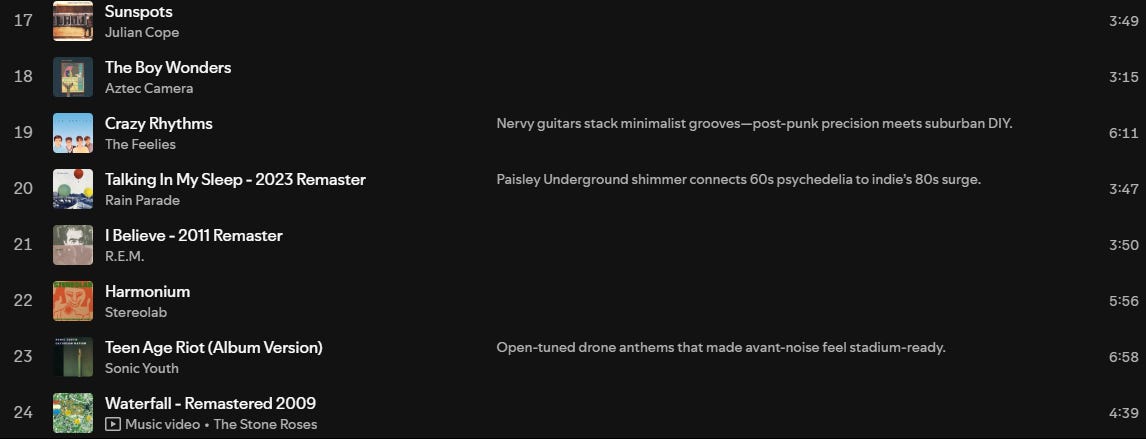
Up in Liverpool, Julian Cope with The Teardrop Explodes (I tried as with Trees, but couldn’t abide their horns and brassiness; Cope’s addled forays into chemicals and druidry enliven his memoirs Head On/ Repossessed: he’s a daft lysergic anti-Xtian raving crusty feminist toy-collecting manic antiquarian Neolithic madman in print) broke from pals in Echo. Scotland found Aztec Camera and then the Postcard label, and while they like successors Belle + Sebastian (#42) I rank too precious too oft, they both incorporated a Celtic lift through upbeat High Land Hard Rain strums; and I’m certain that crossover fertilized Anglophile fans who formed Feelies, REM, and Sonic Youth. With lesser heralded Paisley Undergrounders Rain Parade in L.A. Back in London, Stereolab (using the titular squeezebox REM had under Joe Boyd in ‘83) began merging Krautrock, lounge, electronica, and post-punk. In Manchester, The Smiths, The Fall, and in the “Madchester” Hacienda drug haze The Stone Roses joined grizzled Marxists in Mekons, Glaswegians Teenage Fanclub, Derry’s That Petrol Emotion (with the O’Neill brothers from the estimable Undertones). Who stirred their boyhood ingredients into a fusion, “alternative” slumgullion for “college radio” and the emerging rock stations with dj’s as the Men They Couldn’t Hang. (Nod to Morrissey; I thought of “Reel Around the Fountain” in the recipe for my sly stew.)
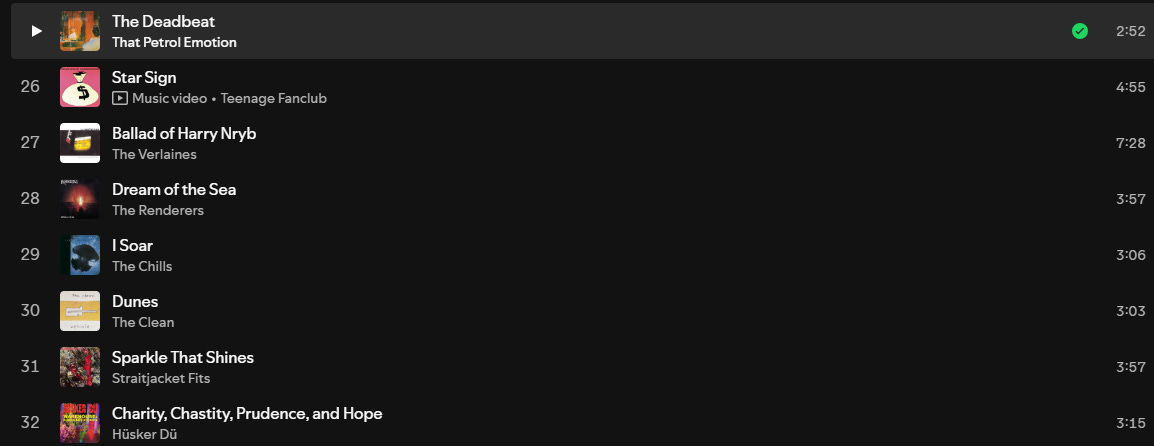
Down under, New Zealand’s Flying Nun label launched Verlaines, Renderers, Chills, Clean, Straitjacket Fits, all of whom I bet found snug space in smart collections of Pavement. Progenitors Husker Du/ Sugar shared in astringent melodic Arch(ie)ness.
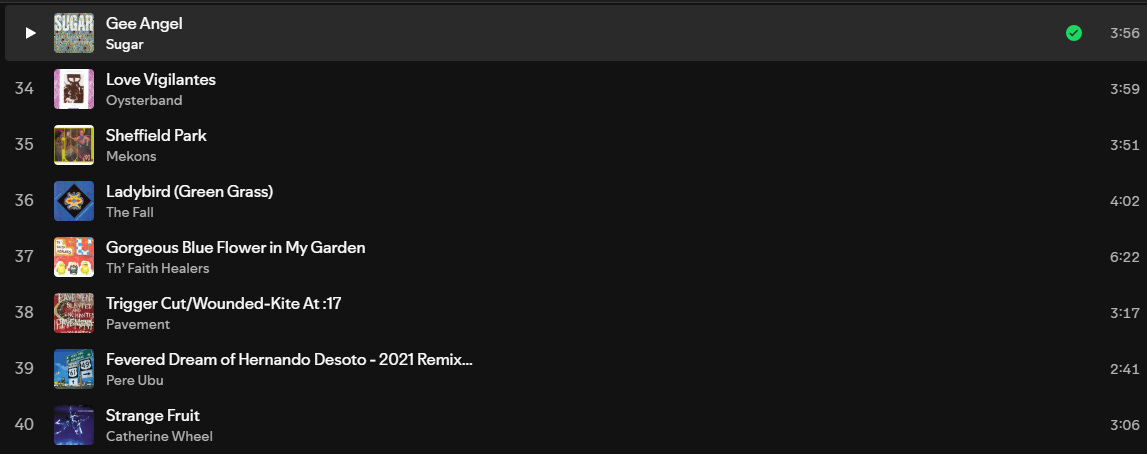
Oysterband I’ve always peered at lacking a pearly shine, but they interpret New Order. I wish Spot had Lido by Faith Healers, on Stereolab’s feisty Too Pure that in the heyday of “alt-rock” boasted fine signees. Pere Ubu’d been at it (as had Devo) in Ohio from the daze of Ten Men Mop almost; this dizzy roar captures them well into their impressive marathon sprint as innovators. And Catherine Wheel merits pride of place for panoramic soundscapes drawing on shoegaze but never staring at their feet.
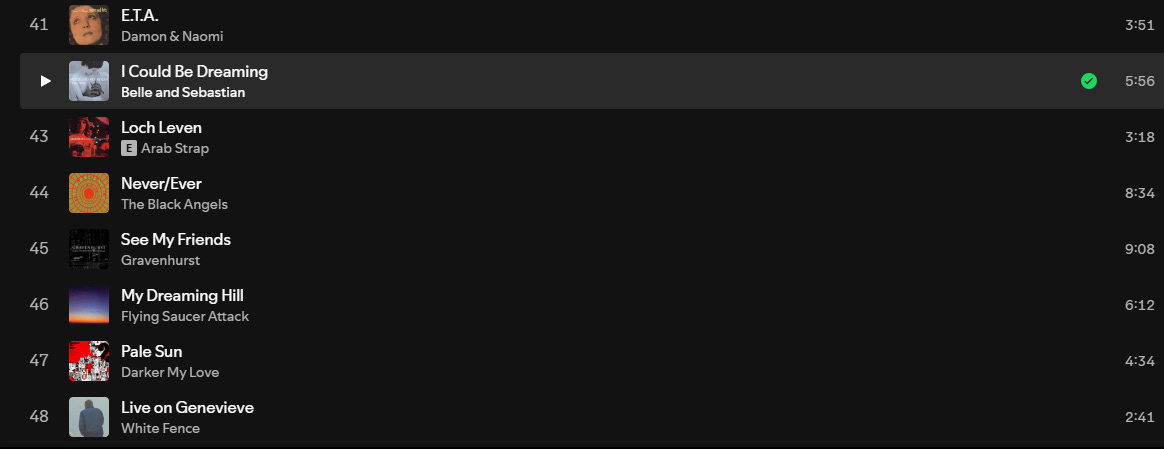
After Galaxie 500, their rhythm section of Damon + Naomi sustained a skittery pastoral hangover of longing and flanging. Bristol’s FSA strolls to “rural psychedelia.” Arab Strap follows Scots Belle into morose swirl, as bagpipes intensify their 2 AM after last call angst. Gravenhurst drones where Velvet Underground twists Kinks, who introduced a ‘66 sitar before the Beatles had released “Norwegian Wood.” Tim Presley’s artwork on Silverlake’s Darker My Love 2 hints at Revolver. My late wife thought that Tim’s White Fence piggybacks Traveling Wilburys. I sure hear George.
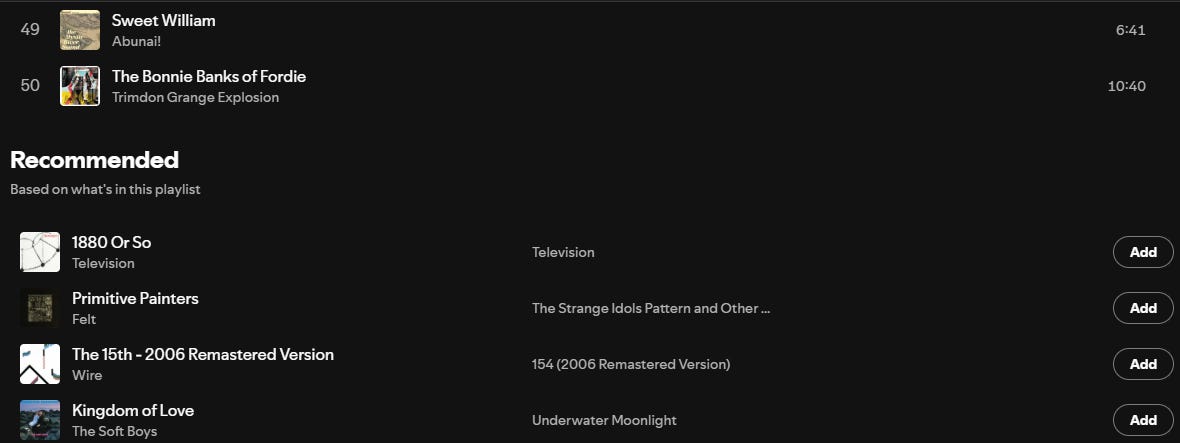
While Boston’s Abunai! never lived up (weak vox plagues many a callow heir) to their admirable slogan “Fairport meets Hawkwind,” a decent 2001 try at Child Ballad #74 shows the endurance of the buzz-cut. Trimdon Grange Explosion’s 2018 to-date sole recording I applaud as the most promising conjuring lately of this venerable ambiance.
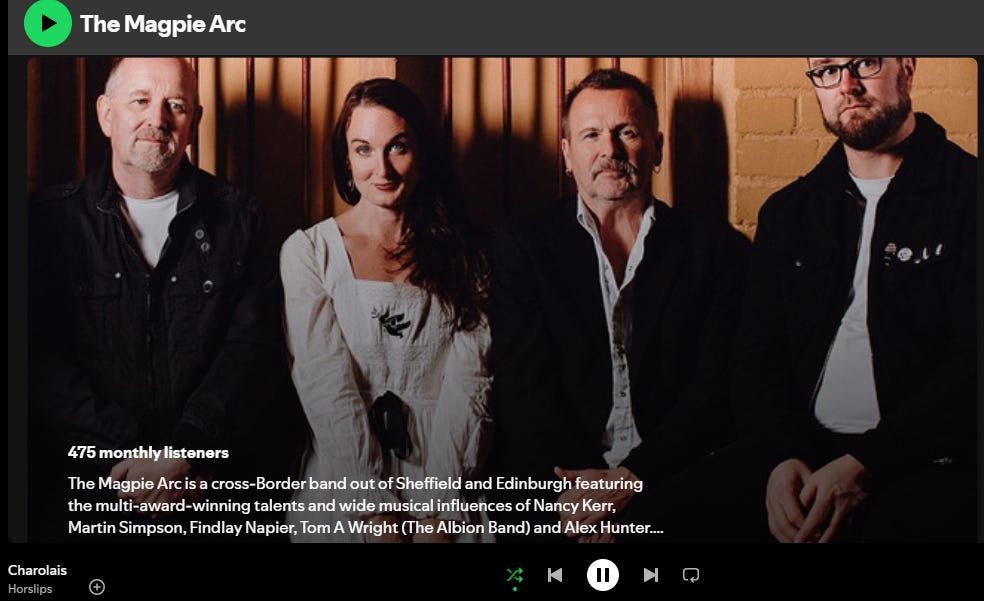
Drafting this with That Darn’d Cat on my lap, I’d scanned (over leftovers c/o Son #1 and spouse; house-arrest feline bonkers over aroma of their kitchen’s secret sauce gracing my quotidian spinach rice) in April’s Mojo (I subscribe via Libby from a grown-up instantiation of my library digitally) a blurb on a “bombastic” (e.g., inheriting Steeleye circa Ten Man Mop or Mr Reservoir Butler Rides Again) Edinburgh-Sheffield combo The Magpie Arc. Promisingly monikered. Compared to over-the-bar (ha) vintage efforts from a sepia ‘71 SS settee. I’d demur (crow-?) Mags’ four paralleled RT’s stretch—he’d long relocated to Santa Monica. Pacific calm might’ve mellowed his mien—under Mitchell Froom. (His 80s/90s studio sheen boosted such as Los Lobos, Crowded House, and Bangles into El Lay FM KCRW-ish hip shelves.) Not to gainsay RT or most (skip MF’s ex, Suzanne Vega) MF “broke” on AoR charts, but RT seemed a slick (still thin) shadow a quarter of a century on. Aren’t we all, I now sigh.
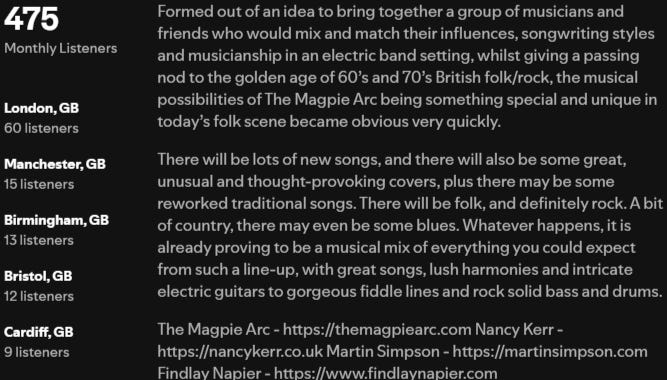
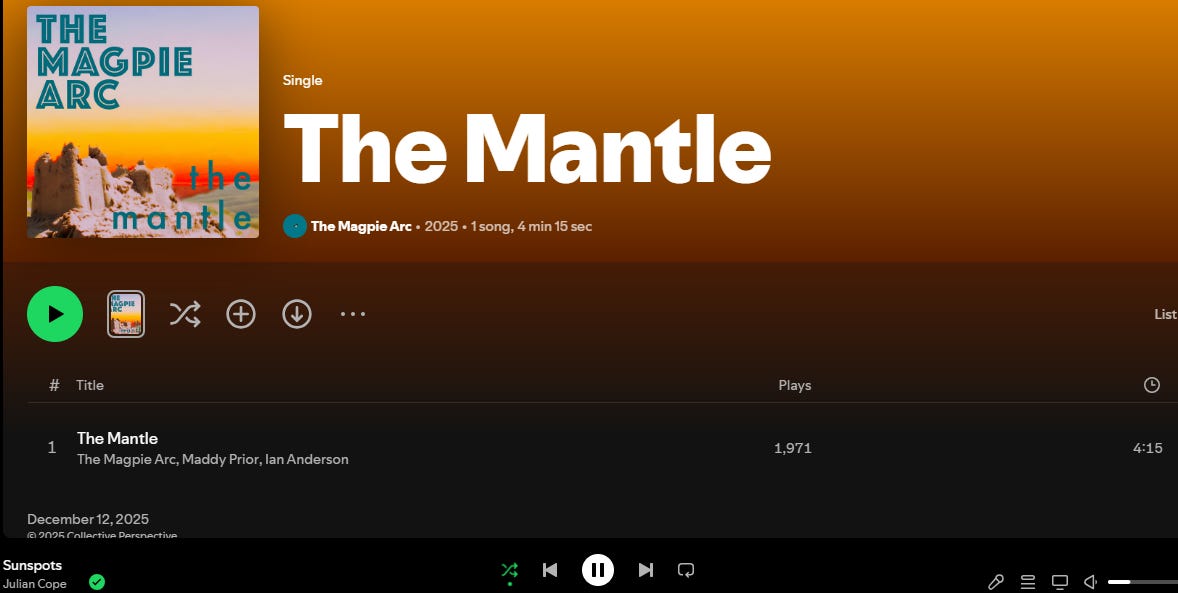
This single from their forthcoming. Note who’s composing on flute and voice. Ian Anderson of Tull produced Steeleye’s Now We Are Six so it’s a Maddy reunion. And Mags' pedigree in Pete Frame attenuation hearkens back to Fairport “Tyger” aka “The Guv'ner” Hutchings. The quartet's Glamour in the Grey 2023 full-length sidles up from a sturdier denser buzzier foundation than their RT-Froom-ish The First Three EP’s. Their male lead imitates either Levon Helm or RT; as both singers obviously indebted to dour Bob Dylan (I’d rather hear him done by Byrds or Fairport than His Bobness), it’s a predictable tick; I hope that Nancy Kerr’s harmony may lift her Mags over this monolithic bardic pose; 2026 Brits no less than buskers in 1956 Greenwich Village can’t inhabit Appalachian souls. But if actors aspire towards crafty illusion so can we who strut or pluck, even hapless me strumming a dulcimer or thumping bass.
Great piece, John. So much there and so many memories. I'm saving the post to re-read. And I'm going to advocate for the Oysterband. Later stuff is decent but veering at times towards MOR. Early work is country dancing folkie. The middle (starting from Step Outside and then Wide Blue Yonder albums) is angry, vigorous and political.
Thanks, Sharon: I only can weigh in on Oysters around their Cooking Vinyl period in the late 80d/early 90s when perhaps they were caught up in that “college radio” alternative wave along with the Pogues and Billy Bragg. I will revisit them as it’s been a few decades!